Newborn Feeding and Sleep Log: What to Track and How
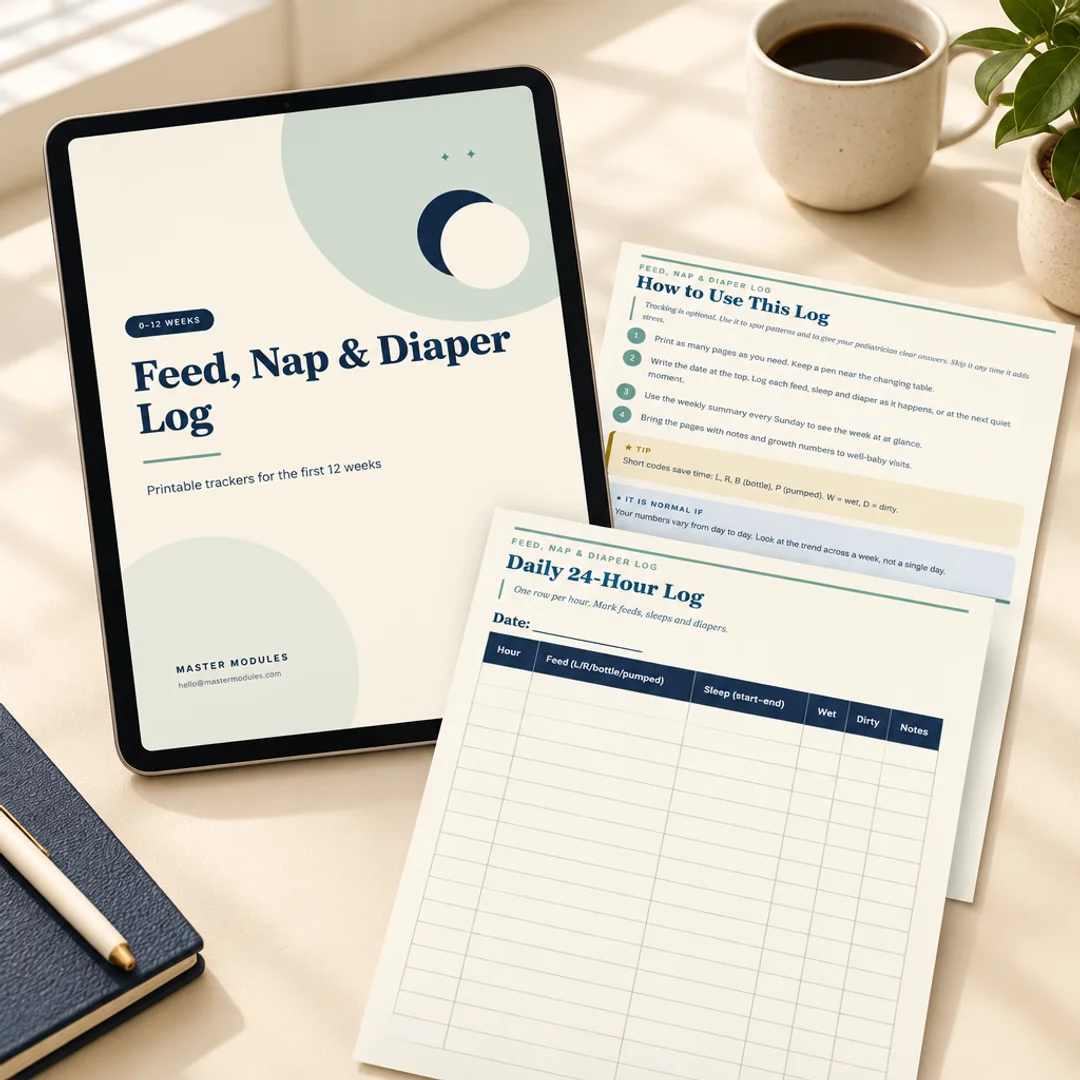
A newborn log can be as simple as a time and a tick: when baby ate, slept and had a wet or dirty diaper. Tracking is optional, and it is useful for two things: spotting patterns and giving your pediatrician clear answers. This page shows what to write down, a sample layout you can copy onto paper or your phone, and how to read a week at a glance without letting the log take over your life.
What to track
| Item | What to write | Why |
|---|---|---|
| Feeds | Time, side or bottle (L, R, B, P for pumped), minutes or ounces | Helps you and your pediatrician see feeding patterns |
| Sleep | Start and end times | Shows total sleep and the longest stretch |
| Wet diapers | Tick each one | One of the best everyday signs that baby is getting enough milk |
| Dirty diapers | Tick each one, plus color and texture if unusual | Stool color and frequency vary a lot |
| Notes | Fussy, cluster feeding, spit-up, anything new | Patterns are easier to see on paper than at 3 a.m. |
Short codes save time: L, R, B (bottle), P (pumped). W = wet, D = dirty.
A simple 24-hour layout
One row per feed or sleep is enough. Here is a sample you can copy.
| Time | Feed (L/R/bottle) | Wet | Dirty | Sleep start | Sleep end | Notes |
|---|---|---|---|---|---|---|
| 6:10 | L 12 min | W | ||||
| 6:50 | 6:50 | 7:35 | Short nap | |||
| 7:35 | D |
Print as many copies as you need. Keep a pen near the changing table. Log each feed, sleep and diaper as it happens, or at the next quiet moment.
A weekly summary
Add up each day to see the bigger picture. A pattern can be easier to spot over seven days.
| Day | Total feeds | Total sleep (hrs) | Longest stretch | Wet diapers | Dirty diapers | Notes |
|---|---|---|---|---|---|---|
| Mon | ||||||
| Tue |
Fill in two sentences at the bottom: This week I noticed... and One thing to try next week.... It is normal if numbers vary from day to day. Look at the trend across a week, not a single day.
Wet and dirty diapers
After the first week, many babies have six or more wet diapers a day, but ask your pediatrician what to expect for your baby. Call your pediatrician if there are fewer wet diapers than usual, if stool is white, gray or contains blood, or if you see signs of dehydration. Call right away if there is no wet diaper in 6 to 8 hours.
Notes for the pediatrician
Appointments go fast. Write questions while you think of them.
- Bring the daily log and weekly summary.
- Write down feeding and diaper counts.
- List any medicines or vitamins.
- Note anything that worries you, even if it seems small.
Record the numbers from each well-baby visit (weight, length, head circumference). Your pediatrician will explain what they mean for your baby. Growth curves vary between babies, and the trend over time matters more than a single measurement.
Make it easy on yourself
- Pick one place to log. A paper page on the fridge or one app, not both.
- Log in batches. Fill in at the next quiet moment.
- Share it. If you split nights, use the log as a handoff. See newborn nights with a partner.
- Stop when it stresses you. A simple note on your phone of when baby woke is enough for wake windows. See the newborn wake windows chart.
What a log can and cannot tell you
A log cannot tell you whether your baby is healthy. It can help you notice that your baby sleeps a lot, feeds less than usual or has fewer wet diapers, which are all good reasons to call. See newborn sleeping a lot for when sleep is a concern.
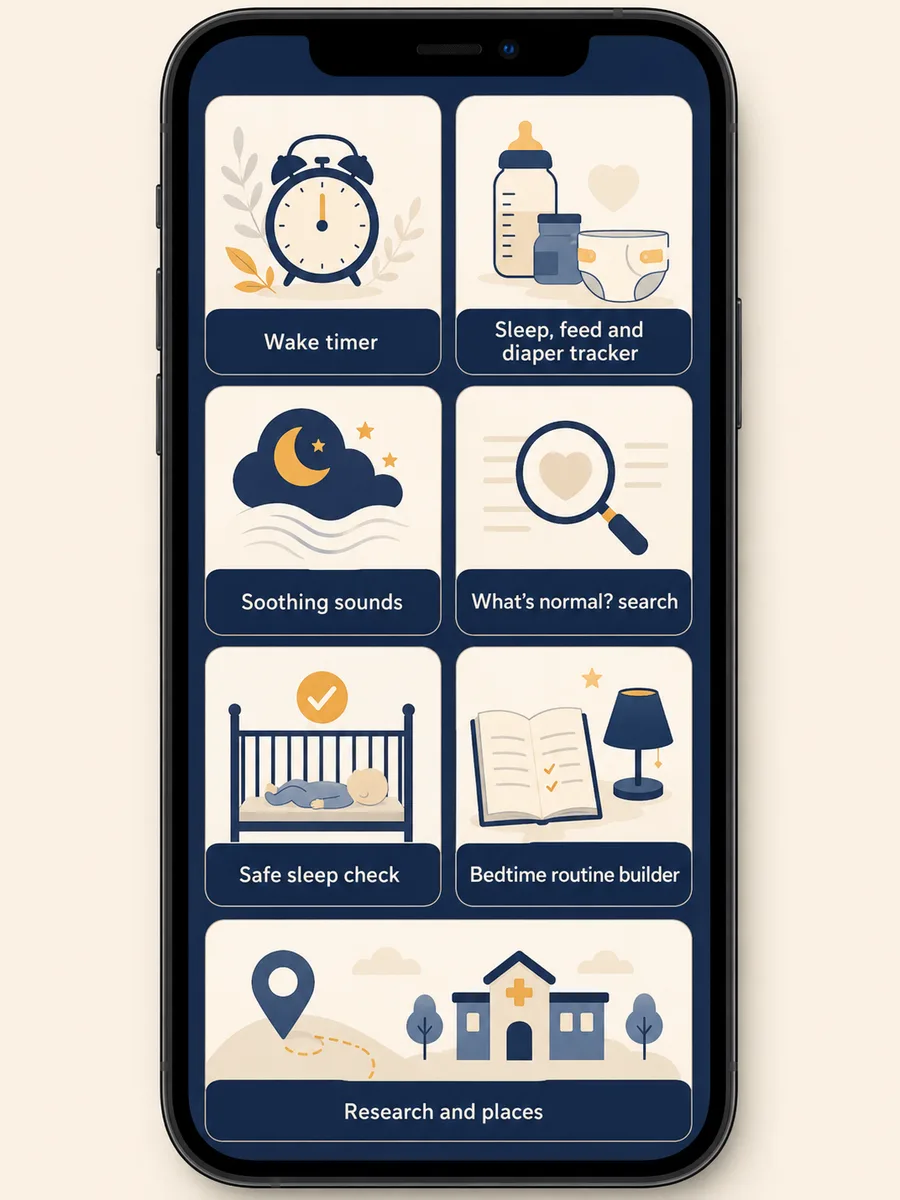
Tools that come with the product
The web app that comes with The Newborn Sleep Playbook has a sleep, feed and diaper tracker and a wake-window timer, and the printables include a daily rhythm planner. The product also has a Fussy Weeks & Growth Spurts Calendar with a 12-week tracker. A dedicated Feed, Nap & Diaper Log with 24-hour pages, weekly summaries and a growth tracker is a separate add-on and is not part of the main product. This page is educational and does not replace your pediatrician's advice.