Newborn Wake Windows Chart: Print-Friendly Table
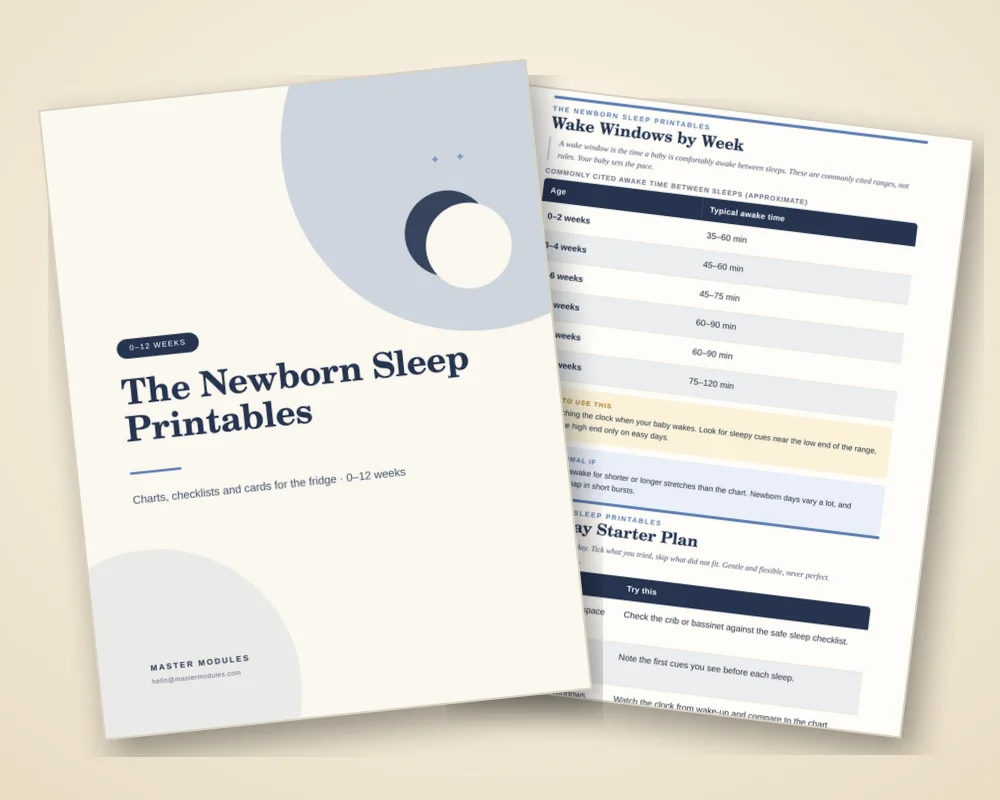
This is a compact wake windows chart you can print or screenshot for the fridge: commonly cited awake time between sleeps, grouped in two-week steps from birth to 12 weeks. For a week-by-week version with explanations, see newborn wake windows by week. This page is the quick-look table, plus a few ideas for putting it to work.
Newborn wake windows chart, weeks 0–12
Commonly cited awake time between sleeps (approximate). Individual babies vary.
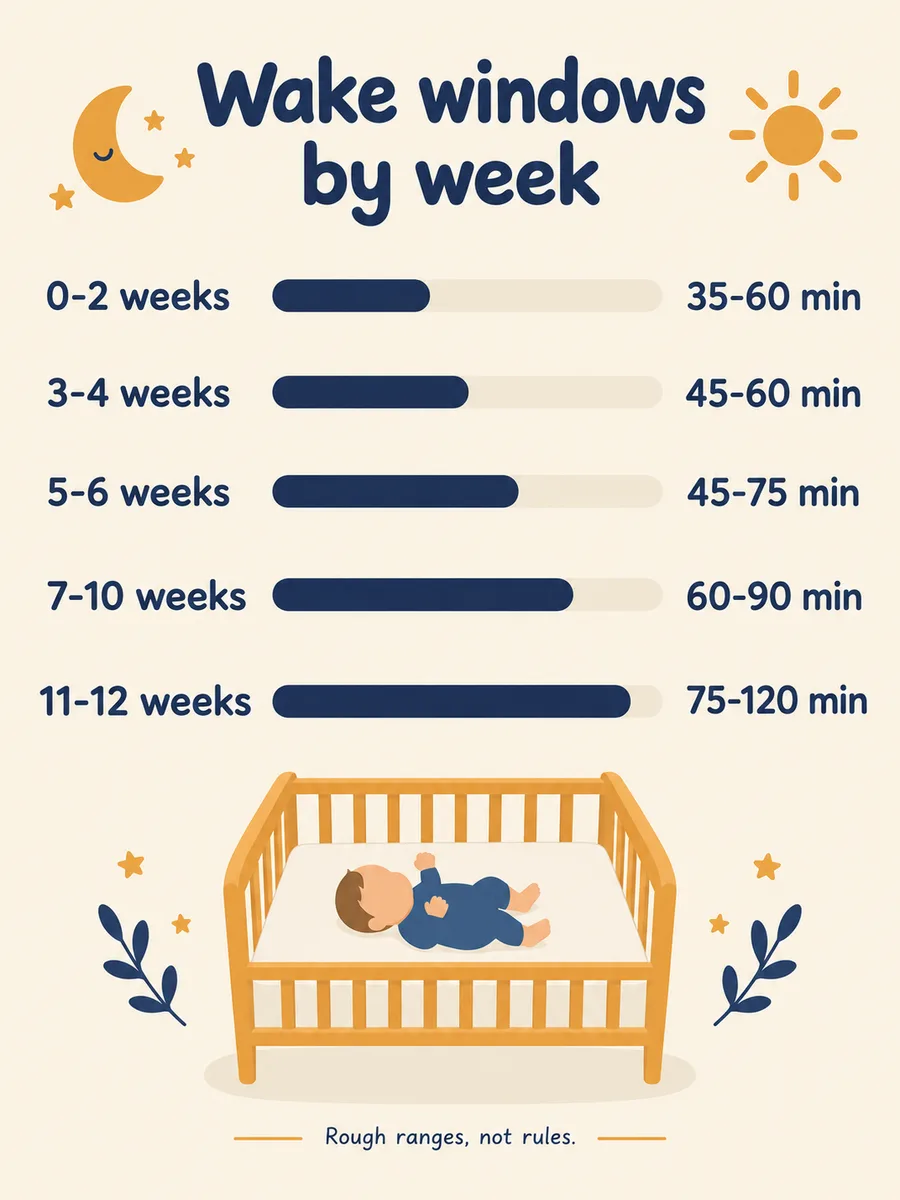
| Age | Typical awake time |
|---|---|
| 0–2 weeks | 35–60 min |
| 3–4 weeks | 45–60 min |
| 5–6 weeks | 45–75 min |
| 7–8 weeks | 60–90 min |
| 9–10 weeks | 60–90 min |
| 11–12 weeks | 75–120 min |
How to use it: start watching the clock when your baby wakes. Look for sleepy cues near the low end of the range, and use the high end only on easy days.
It is normal if your baby is awake for shorter or longer stretches than the chart. Newborn days vary a lot, and many babies nap in short bursts.
Put it next to a cues chart
Cues lead, and the clock backs them up. Print a one-page cues list next to the wake windows chart. Early cues (quieter, staring off, yawning, red eyebrows) mean a sleep window is opening. Late cues (arching, frantic crying, second wind) often mean baby has been awake a bit long. See sleepy cues vs. overtired cues. The quick rule: see two cues in a row? Start your wind-down.
A simple 7-day starter plan
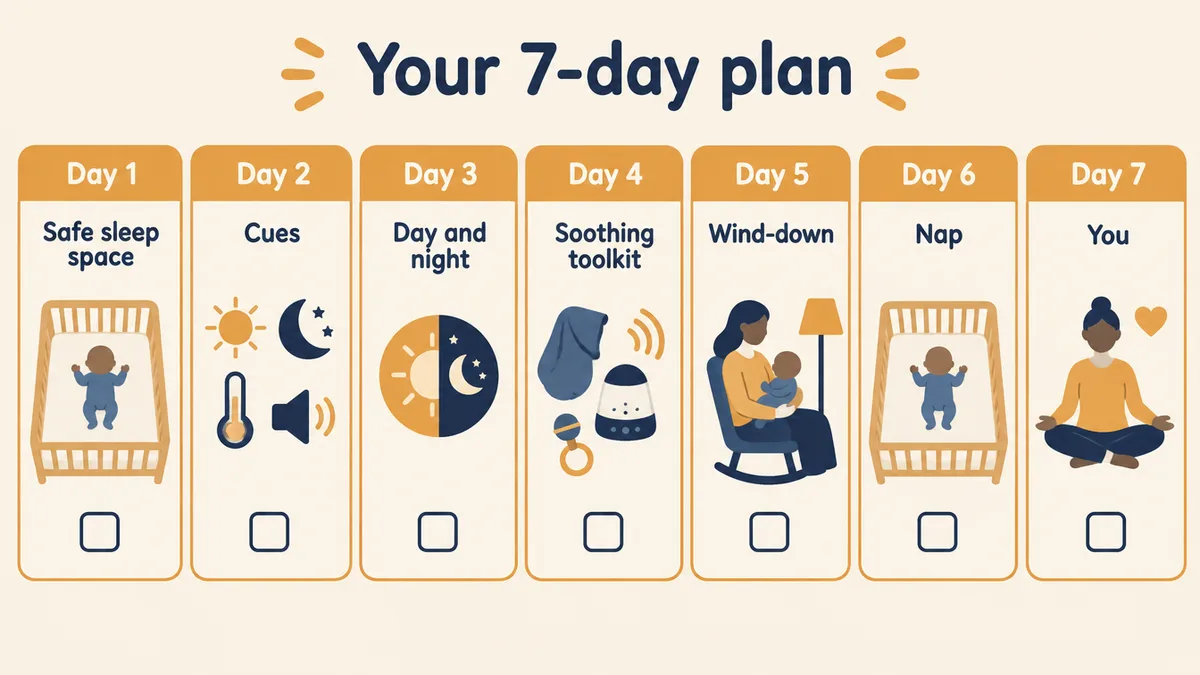
A chart is more useful with a tiny plan. One focus per day:
| Day | Focus | Try this |
|---|---|---|
| Day 1 | Safe sleep space | Check the crib or bassinet against the safe sleep checklist |
| Day 2 | Sleepy cues | Note the first cues you see before each sleep |
| Day 3 | Wake windows | Watch the clock from wake-up and compare to the chart |
| Day 4 | Bedtime routine | Pick 3 to 4 calm steps and repeat them in the same order |
| Day 5 | Day and night | Bright, lively days. Dim, quiet, low-talk nights |
| Day 6 | Calm-down ladder | Use the ladder steps in order when baby is fussy |
| Day 7 | Review and rest | Look at your log. Keep what helped. Ask for help with one task |
A daily rhythm planner
This is not a schedule. It is just a place to notice your baby's natural pattern over the day. For each wake-up, write down:
- Wake time
- Cues seen
- Feed
- Sleep start and sleep end
- Mood and notes
After three days, circle the times that seemed easiest. Those are your anchors. If you also want a log of feeds and diapers, see newborn feeding and sleep log.
A calm-down ladder for the fridge
When baby is fussy, climb one step at a time and stop at the step that works:
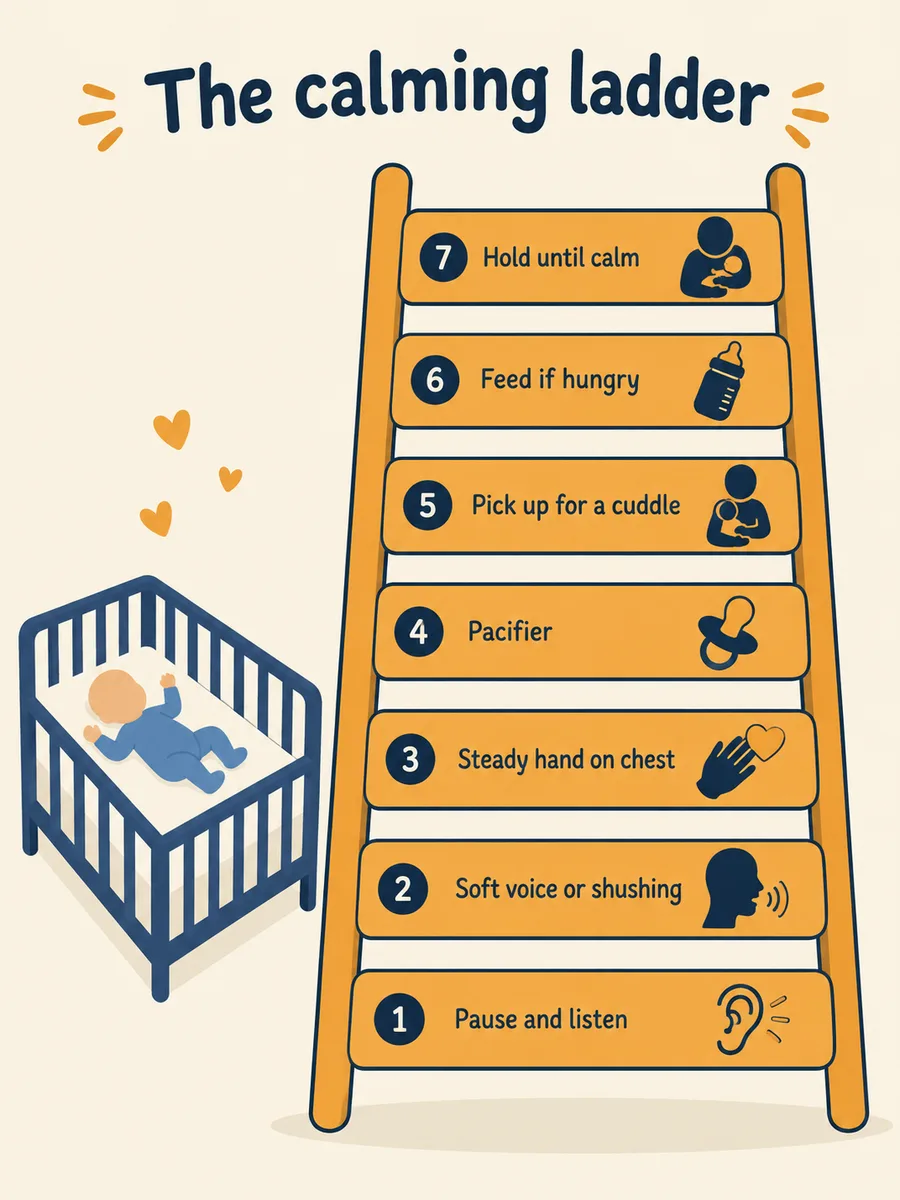
- Check the basics: feed, diaper, temperature, anything scratchy or tight.
- Lower the stimulation: dim lights, soft voice, fewer hands.
- Hold baby close, skin to skin if you like.
- Try gentle rhythm: slow rocking, swaying or walking.
- Add soft sound: a steady shush or low white noise.
- Offer sucking if baby wants it: a feed, or a pacifier if you use one.
- Take a break. If you feel overwhelmed, place baby on their back in a safe, empty crib, step away and breathe for a few minutes.
Never shake a baby. If crying is nonstop, sounds high-pitched or unusual, or comes with fever, vomiting, poor feeding or changes in color or breathing, call your pediatrician.
Safe sleep first
Wake windows are about when to sleep. Safe sleep is about how. For every sleep: baby on their back, firm and flat surface, fitted sheet only, nothing else in the crib, room-share but do not bed-share. Printed charts do not replace that checklist.
What is in the full printable set
The Newborn Sleep Printables PDF that comes with The Newborn Sleep Playbook contains the wake windows chart, a 7-day starter plan, sleepy vs. overtired cues, a calm-down ladder, a safe sleep checklist, a what-to-do-tonight page, a bedtime routine checklist, a daily rhythm planner, a contact list for the fridge and six bedtime routine cards. It also includes the 46-page Playbook and a web app. This page is educational and does not replace your pediatrician's advice.