Newborn Bedtime Routine: A Simple 10-Minute Plan
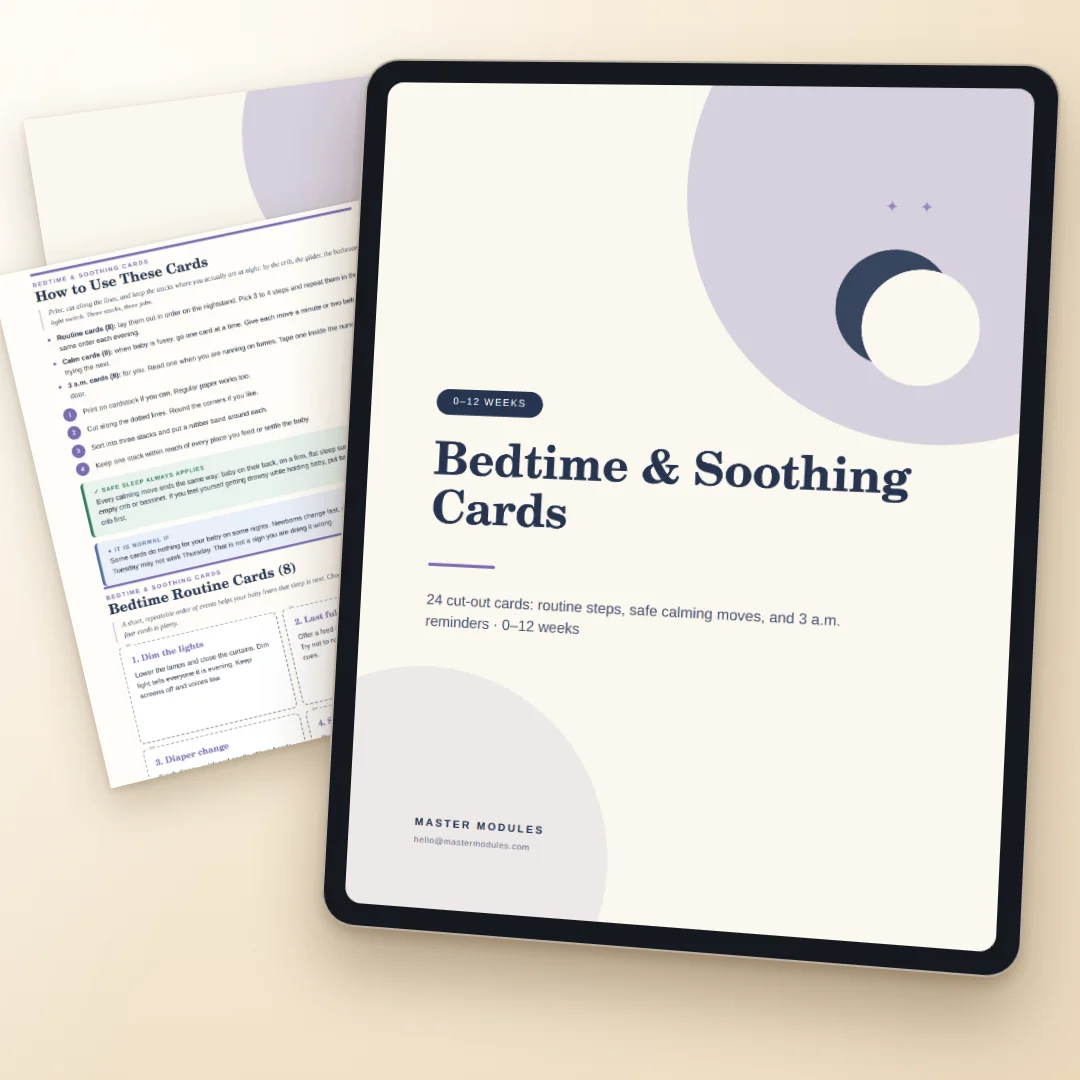
A newborn bedtime routine can be as short as 10 minutes: dim the lights, change, feed, cuddle, a song, and lay baby down on their back. Newborns do not need a long or perfect routine. What helps is a short, predictable order that tells their body "this is nighttime," repeated gently over the first weeks. This page gives a six-step version, what to adjust by week and what to skip.
The six steps
- Dim. Lower the lights and the volume. Tell baby in a soft voice that it is quiet time.
- Change. A fresh diaper and a sleep sack or light layer. Keep it short and gentle.
- Feed. Feed in a calm spot. Burp and cuddle after.
- Soothe. A slow song, a soft hum or a shush. Whatever feels calm to you.
- Lay down. On the back, flat, in a bare crib or bassinet. A hand on tummy or chest for a moment if you like.
- Goodnight. The same words every night. Then tiptoe out and rest too.
You can print these as six cards and flip through them in order, or hand a card to whoever is helping tonight.
Keep the order, change the length
Your routine may look different every few days at this age. That is normal. Keep the order and change the length. If your baby is overtired, skip to the quiet steps.
Pick one anchor
If six steps feels like too much, pick just one anchor: the same bedtime song or phrase each night. Predictable cues help babies learn "this is nighttime," even at a few weeks old.
What to adjust by age
| Age | What the evening often looks like | Routine idea |
|---|---|---|
| Weeks 0–4 | Cluster feeding and fussiness are common in the evening. | Cuddle, swaddle if appropriate, low white noise. Keep it simple. |
| Weeks 5–8 | Early evening is a fussy window for many babies. Bedtime often falls between 8 and 10 p.m. | Gentle routine: feed, change, song, down. |
| Weeks 9–12 | A little more pattern. | Consistent routine, bath if you like, feed, soft song, lay down drowsy. |
These are examples and not rules. If your baby does not follow them today, you have not done anything wrong.
Days and nights need different cues
A routine works better with a day-night contrast. Let daylight in during the day, especially in the morning. Make nights boring: dim, quiet and calm. At night feeds, keep the light low, talk little and go back to sleep.
Safe sleep is part of the routine
Before every sleep, take 60 seconds to check:
- Baby is on their back.
- The surface is firm and flat, with a fitted sheet only.
- Nothing else in the crib or bassinet: no pillows, blankets, bumpers or toys.
- Baby's sleep space is in your room, not your bed.
- Baby is dressed for the room, not overdressed, head uncovered.
If you swaddle, follow the AAP rules and stop at the first signs of rolling. See safe sleep nursery setup.
Sound and light
White noise can help mask household noise. Keep the machine across the room, never in the crib, at conversation volume or lower. See white noise for newborns. A night light, if you use one, should be dim, warm and low so baby's face stays shaded.
What to skip
- A long routine. Ten minutes is enough.
- Strict clock times. Follow cues and the wake window. See newborn wake windows by week.
- Sleep training. Newborns are not ready, and this approach does not rely on leaving a newborn to cry alone.
- Guilt about feeding or rocking to sleep. Both are normal at this age.
If baby protests when you lay them down
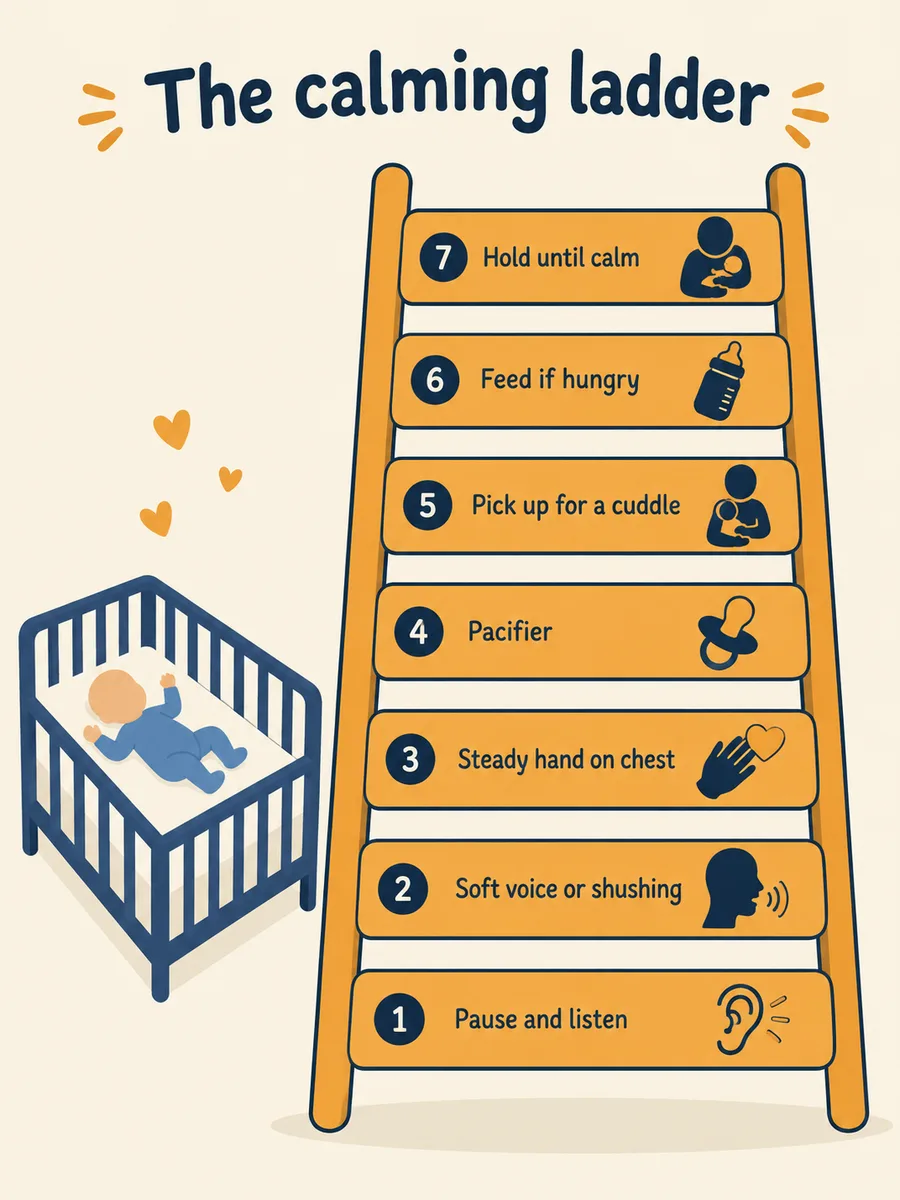
This is very common. See newborn won't sleep unless held for a calming ladder and other gentle options.
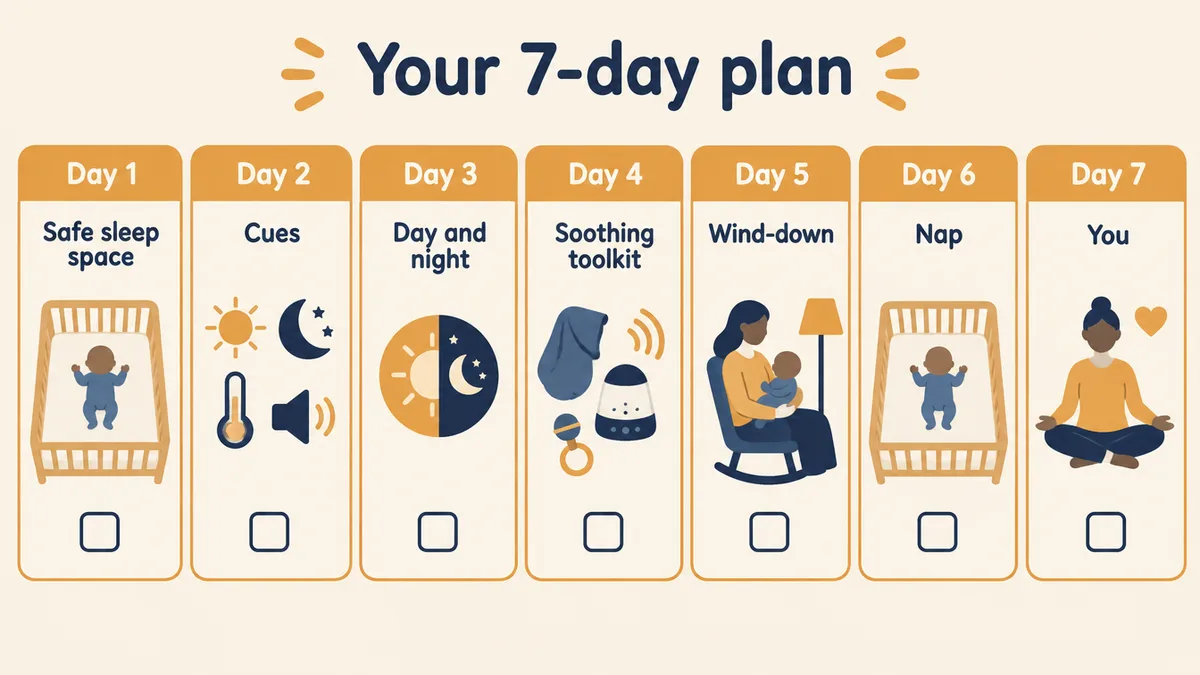
A 7-day way to build it
- Day 1. Do a 60-second safe sleep check.
- Day 2. Notice the first sleepy cue before each sleep.
- Day 3. Make days bright and nights dim.
- Day 4. Choose three or four calm steps.
- Day 5. Repeat them in the same order.
- Day 6. Try the same order for a nap.
- Day 7. Review and keep what helped. Ask for help with one task.
What changes next
Around 3 to 4 months, sleep starts to reorganize and a routine of 15 to 30 minutes becomes more useful. See the 3 and 4 month old sleep schedule.
Routine cards and a checklist
The Newborn Sleep Playbook includes a bedtime routine checklist, six cut-out routine cards, a flexible daily rhythm chapter and a 7-day starter plan. It is educational and does not replace your pediatrician's advice.